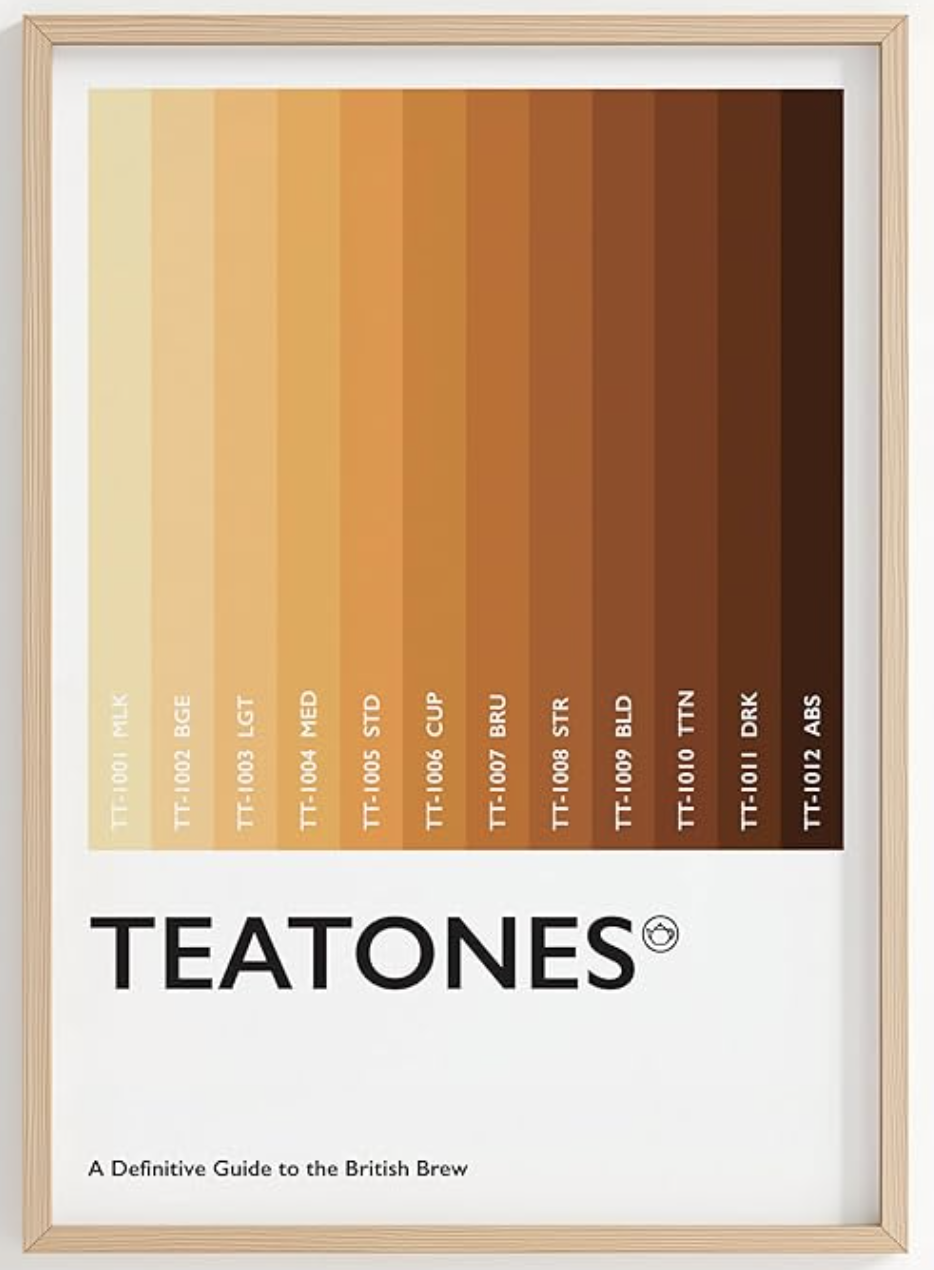
Many years ago, on a production I worked on, there was a runner who carried a laminated colour chart of browns. Not for set design. For tea. Before doing the rounds, he would hold it up and let each person point to the exact shade they wanted — from builder's mahogany to a barely-there beige. It took him an extra ninety seconds per round. People talked about it for years. Nobody on that production remembers what the clever people did. Everyone remembers the tea chart.
Hold that thought, because it explains almost everything about how careers in television actually work.
In 2009, two runners started on the same shiny-floor entertainment show on the same Monday. One had a first from a Russell Group university, a showreel, and a five-year plan. The other had a Vauxhall Corsa, a flask of coffee, and a habit of asking the gallery PA if she wanted anything from the canteen.
Ten years later, one of them was a series producer. You already know which one.
We tell ourselves that television is a meritocracy of ideas — that the best format wins, the sharpest edit gets the slot, the boldest pitch gets commissioned. But spend any time on a production and you notice something strange: the people who rise are rarely the most obviously brilliant. They are the most relentlessly pleasant to work with under pressure. This is not a coincidence. It is the industry's hidden operating system. Here are six reasons why optimism and a small ego will take you further in TV than talent ever will.
1. The Runner's Paradox
Here is the strange economics of the bottom rung: the runner's job is designed to be beneath you. Tea rounds, car parks, release forms, lunches. And that is precisely the point. The job is not a test of competence — anyone can carry a tray. It is a test of ego under humiliation.
The runner who treats the tea round as an insult signals something fatal: that they believe certain work is beneath them. The runner with the colour chart was signalling the opposite — that no task was too small to do brilliantly, with wit, in public. Production managers — the people who actually do the hiring — are not looking for genius at this level. They are looking for someone who will not become a problem at 2am in a car park in Salford. The paradox is that the fastest way out of the runner job is to do the runner job as if you love it.
2. The Gallery Test
Live television has a built-in stress laboratory: the gallery. Ten people in a dark room, a presenter going off-script, a VT that won't play, and a director whose blood pressure is visible from space. Psychologists who study high-pressure teams — Amy Edmondson's work on psychological safety is the touchstone here — have found that the teams that perform best under stress are not the ones with the most talented individuals. They are the ones where people feel safe to say "I've made a mistake" out loud, fast.
Optimists create that safety. The person who says "okay, we can fix this, here's what we do" in a crisis becomes the person everyone wants in the room next time. The person who sighs, blames, or visibly panics becomes a story people tell at the wrap party. In TV, your reputation is not built across your career. It is built in about four bad moments — and how you behaved in them.
3. Credit Is a Renewable Resource
There is a peculiar arithmetic to credit in television. The egotist hoards it, believing credit is finite — that every "actually, that was my idea" is a deposit in the career bank. The opposite is true. Credit given away comes back with interest, because television is an industry of witnesses. Everyone in the edit knows whose idea the restructure really was. Everyone in the meeting saw who solved the problem.
When you hand credit to the junior researcher in front of the exec, two things happen. The researcher becomes loyal to you for years. And the exec — who has seen a thousand credit-grabbers — quietly marks you as someone secure enough to lead. Adam Grant's research on "givers and takers" found that givers are over-represented at both the bottom and the top of organisations. The difference between the doormats and the leaders is not generosity. It's that successful givers are generous strategically and visibly. TV rewards exactly this.
4. The Weak-Tie Economy
Television is a freelance industry, which means it runs on a mechanism sociologist Mark Granovetter identified fifty years ago: the strength of weak ties. Your next job almost never comes from your best friend. It comes from a production coordinator you worked with for three weeks in 2021 who half-remembers you as "really easy, really positive" and passes your name along.
This is where ego becomes mathematically expensive. The difficult-but-talented operator gets rehired by the small circle of people who know the work justifies the friction. The pleasant, optimistic operator gets recommended by everyone — including people who barely know their work, because "lovely to have around" is the only data point a weak tie carries. In a referral economy, being a joy to work with is not a soft skill. It is your distribution strategy.
5. Rejection Is the Job, Optimism Is the Armour
Here is a number nobody tells you at the start: commissioners say no to well over ninety percent of what crosses their desk. A development producer might write forty treatments to get one greenlight. The industry is, structurally, a rejection machine — and it sorts people not by talent but by recovery speed.
The ego-driven take rejection as a verdict on themselves, and it shows: they pitch more defensively, they get bitter about other people's commissions, they curdle. The optimists treat each "no" as information — wrong channel, wrong slot, wrong year — and go again. Martin Seligman's work on explanatory style found that optimists outperform in any field defined by repeated failure, not because they fail less, but because they reload faster. Development is a numbers game played by people who can stay cheerful at the bottom of the deck.
6. The Second-Camera Principle
Watch a self-shooting director who's been doing it twenty years work alongside one who's been doing it two. The veteran will still ask the junior, "what are you seeing on the second camera?" — not as a courtesy, but because they genuinely want the answer. The moment you decide you have nothing left to learn from the people below you is the moment your work starts to date.
Television reinvents itself roughly every five years — formats, platforms, audience habits, now AI in the edit suite. The people who survive each turn of the wheel are not the ones defending their expertise. They are the ones humble enough to be taught by a 23-year-old who understands the new thing. Ego freezes you at the moment of your greatest success. Curiosity keeps you employable.
The Quiet Conclusion
None of this means talent doesn't matter. It means talent is the entry fee, not the prize. Television is a small island that pretends to be a vast ocean — everyone has worked with everyone, and the file the industry keeps on you contains almost nothing about your ideas and almost everything about how you made people feel at 11pm on day four of a difficult shoot.
The runner with the flask of coffee understood something the five-year-plan runner didn't: in TV, you are not building a CV. You are building a reputation for being the person people want in the room when it all goes wrong. Optimism gets you invited. Lack of ego keeps you there.
Next in the series: why your network isn't who you know — it's who remembers you.