• TV
  • Music
  • Branded Content
  • Blog
  • CV
  • About
  • Contact
Menu

Antoine Lyons

Director / PD / EP
  • TV
  • Music
  • Branded Content
  • Blog
  • CV
  • About
  • Contact
×

The Runner Who Smiled: Why the Nicest Person in the Room Usually Wins in Television

Antoine Lyons June 10, 2026

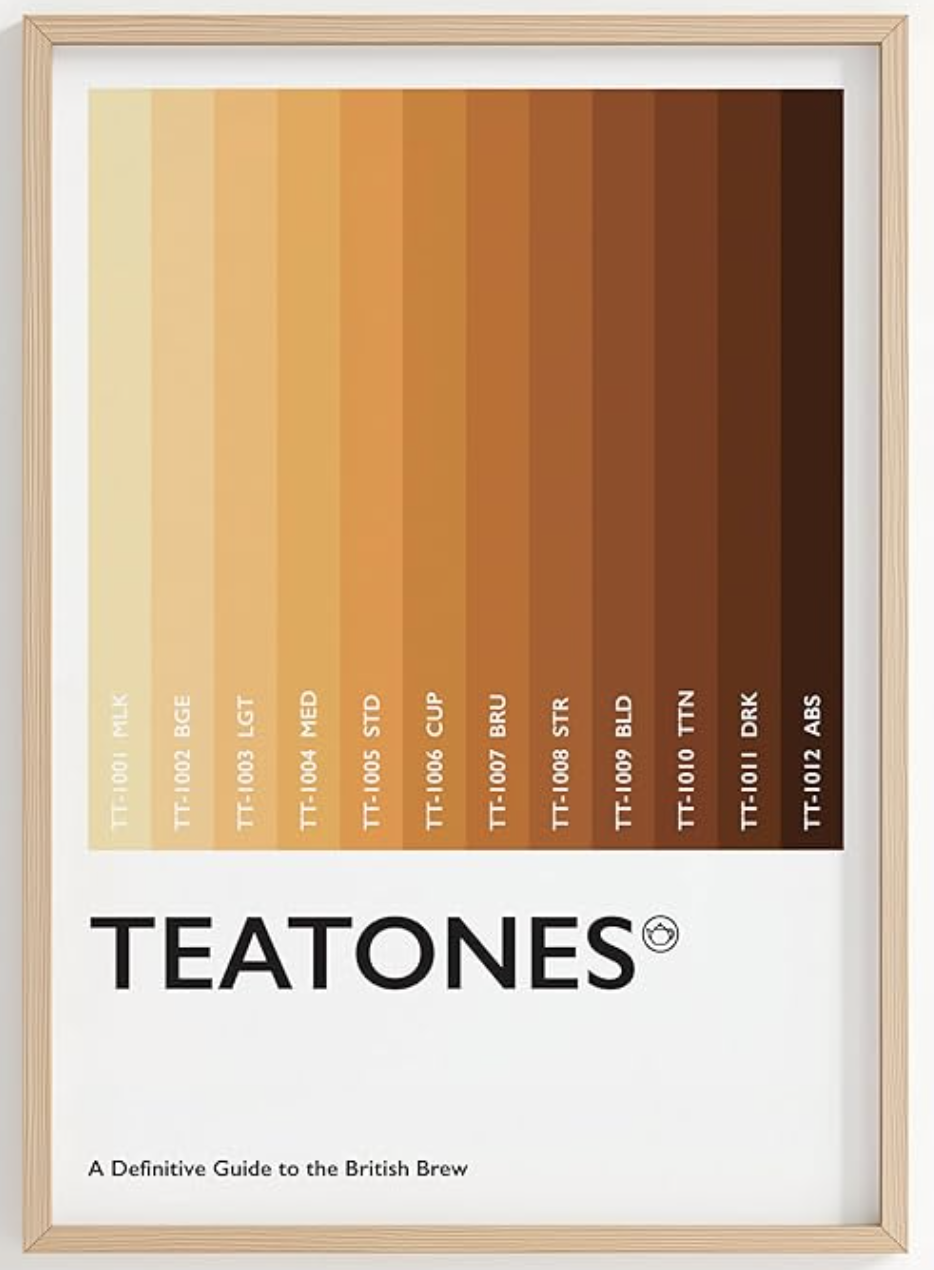
Many years ago, on a production I worked on, there was a runner who carried a laminated colour chart of browns. Not for set design. For tea. Before doing the rounds, he would hold it up and let each person point to the exact shade they wanted — from builder's mahogany to a barely-there beige. It took him an extra ninety seconds per round. People talked about it for years. Nobody on that production remembers what the clever people did. Everyone remembers the tea chart.

Hold that thought, because it explains almost everything about how careers in television actually work.

In 2009, two runners started on the same shiny-floor entertainment show on the same Monday. One had a first from a Russell Group university, a showreel, and a five-year plan. The other had a Vauxhall Corsa, a flask of coffee, and a habit of asking the gallery PA if she wanted anything from the canteen.

Ten years later, one of them was a series producer. You already know which one.

We tell ourselves that television is a meritocracy of ideas — that the best format wins, the sharpest edit gets the slot, the boldest pitch gets commissioned. But spend any time on a production and you notice something strange: the people who rise are rarely the most obviously brilliant. They are the most relentlessly pleasant to work with under pressure. This is not a coincidence. It is the industry's hidden operating system. Here are six reasons why optimism and a small ego will take you further in TV than talent ever will.

1. The Runner's Paradox

Here is the strange economics of the bottom rung: the runner's job is designed to be beneath you. Tea rounds, car parks, release forms, lunches. And that is precisely the point. The job is not a test of competence — anyone can carry a tray. It is a test of ego under humiliation.

The runner who treats the tea round as an insult signals something fatal: that they believe certain work is beneath them. The runner with the colour chart was signalling the opposite — that no task was too small to do brilliantly, with wit, in public. Production managers — the people who actually do the hiring — are not looking for genius at this level. They are looking for someone who will not become a problem at 2am in a car park in Salford. The paradox is that the fastest way out of the runner job is to do the runner job as if you love it.

2. The Gallery Test

Live television has a built-in stress laboratory: the gallery. Ten people in a dark room, a presenter going off-script, a VT that won't play, and a director whose blood pressure is visible from space. Psychologists who study high-pressure teams — Amy Edmondson's work on psychological safety is the touchstone here — have found that the teams that perform best under stress are not the ones with the most talented individuals. They are the ones where people feel safe to say "I've made a mistake" out loud, fast.

Optimists create that safety. The person who says "okay, we can fix this, here's what we do" in a crisis becomes the person everyone wants in the room next time. The person who sighs, blames, or visibly panics becomes a story people tell at the wrap party. In TV, your reputation is not built across your career. It is built in about four bad moments — and how you behaved in them.

3. Credit Is a Renewable Resource

There is a peculiar arithmetic to credit in television. The egotist hoards it, believing credit is finite — that every "actually, that was my idea" is a deposit in the career bank. The opposite is true. Credit given away comes back with interest, because television is an industry of witnesses. Everyone in the edit knows whose idea the restructure really was. Everyone in the meeting saw who solved the problem.

When you hand credit to the junior researcher in front of the exec, two things happen. The researcher becomes loyal to you for years. And the exec — who has seen a thousand credit-grabbers — quietly marks you as someone secure enough to lead. Adam Grant's research on "givers and takers" found that givers are over-represented at both the bottom and the top of organisations. The difference between the doormats and the leaders is not generosity. It's that successful givers are generous strategically and visibly. TV rewards exactly this.

4. The Weak-Tie Economy

Television is a freelance industry, which means it runs on a mechanism sociologist Mark Granovetter identified fifty years ago: the strength of weak ties. Your next job almost never comes from your best friend. It comes from a production coordinator you worked with for three weeks in 2021 who half-remembers you as "really easy, really positive" and passes your name along.

This is where ego becomes mathematically expensive. The difficult-but-talented operator gets rehired by the small circle of people who know the work justifies the friction. The pleasant, optimistic operator gets recommended by everyone — including people who barely know their work, because "lovely to have around" is the only data point a weak tie carries. In a referral economy, being a joy to work with is not a soft skill. It is your distribution strategy.

5. Rejection Is the Job, Optimism Is the Armour

Here is a number nobody tells you at the start: commissioners say no to well over ninety percent of what crosses their desk. A development producer might write forty treatments to get one greenlight. The industry is, structurally, a rejection machine — and it sorts people not by talent but by recovery speed.

The ego-driven take rejection as a verdict on themselves, and it shows: they pitch more defensively, they get bitter about other people's commissions, they curdle. The optimists treat each "no" as information — wrong channel, wrong slot, wrong year — and go again. Martin Seligman's work on explanatory style found that optimists outperform in any field defined by repeated failure, not because they fail less, but because they reload faster. Development is a numbers game played by people who can stay cheerful at the bottom of the deck.

6. The Second-Camera Principle

Watch a self-shooting director who's been doing it twenty years work alongside one who's been doing it two. The veteran will still ask the junior, "what are you seeing on the second camera?" — not as a courtesy, but because they genuinely want the answer. The moment you decide you have nothing left to learn from the people below you is the moment your work starts to date.

Television reinvents itself roughly every five years — formats, platforms, audience habits, now AI in the edit suite. The people who survive each turn of the wheel are not the ones defending their expertise. They are the ones humble enough to be taught by a 23-year-old who understands the new thing. Ego freezes you at the moment of your greatest success. Curiosity keeps you employable.

The Quiet Conclusion

None of this means talent doesn't matter. It means talent is the entry fee, not the prize. Television is a small island that pretends to be a vast ocean — everyone has worked with everyone, and the file the industry keeps on you contains almost nothing about your ideas and almost everything about how you made people feel at 11pm on day four of a difficult shoot.

The runner with the flask of coffee understood something the five-year-plan runner didn't: in TV, you are not building a CV. You are building a reputation for being the person people want in the room when it all goes wrong. Optimism gets you invited. Lack of ego keeps you there.

Next in the series: why your network isn't who you know — it's who remembers you.

Tags british television, television, motivation, career advice
Comment

The Tipping Point Has Already Passed: Seven Opportunities in British Television You're Probably Ignoring

Antoine Lyons May 20, 2026

The UK screen industry is worth £13.3 billion and everyone thinks they know what that means.

They're wrong.

1. The Crisis Is the Opportunity

Here is a paradox worth sitting with. There has been a 22% drop in domestic high-end television commissions, a 50% collapse in international co-productions, and yet — spending on production has risen dramatically. The domestic broadcasters are retreating. The international money is flooding in. Most people look at this and see a problem. The shrewder observer sees a gap — specifically, the gap between what British broadcasters used to commission and what nobody is commissioning now: mid-budget, distinctly British stories that don't need a Netflix logo to exist. The crisis in domestic funding is clearing the field of competition. That's not a disaster. That's an invitation.

What to do:

Map the commissioning gap. Pull the last three years of Channel 4, ITV and BBC commission announcements and identify the genres and price points that have quietly disappeared. That whitespace is your brief. Develop two or three ideas that sit precisely in it — budgeted for what domestic broadcasters can actually spend today, not what they spent in 2021.

2. The £100 Billion Nobody Notices

The UK media industry generated an estimated £100 billion in revenue in 2024 and is forecast to grow to £121 billion by 2028, making it the largest media market in Europe. Read that again. The largest in Europe. Not France, with its grand cultural protectionism. Not Germany, with its engineering efficiency. Britain. And yet the conversation in most industry rooms is one of contraction and anxiety. There is something almost psychologically interesting about an industry this large that carries itself like a patient in a waiting room. The opportunity for anyone who can see past the mood to the numbers is substantial.

What to do:

Stop pitching from a position of supplication. The data gives you leverage — use it. When approaching international co-production partners, advertisers, or investors, lead with the market size and growth trajectory. The UK is not a struggling cottage industry asking for support. It is the premier European media market. Frame your proposition accordingly, and you will find the room changes.

3. The Bundling Revolution Nobody Invited You To

Consolidation, bundling, and cross-platform partnerships are becoming central to long-term strategies on both sides of the pay-TV and SVoD divide. What does that mean in practice? It means the distribution map is being redrawn. Sky now carries HBO Max. BT bundles Netflix and Amazon. The walls between platforms are dissolving — and every time a wall dissolves, a new tollbooth appears. The opportunity is not in being a platform. It's in being the content that every platform wants to carry. In a world where access is everywhere, scarcity moves upstream — to the ideas themselves.

What to do:

Retain your IP. This is the single most important structural decision any independent producer can make right now. When negotiating with platforms or broadcasters, fight for ownership of underlying rights — format rights, sequel rights, international rights. The platforms are consolidating distribution; you consolidate the ideas. In five years, the producers who held their IP will be running the industry. The ones who sold it will be wondering what happened.

4. The Social Media Misunderstanding

Some consumers now consider watching videos on social media and on streaming services to be the same thing — "watching TV." The traditional industry finds this alarming. They shouldn't. Throughout history, every time a new medium has absorbed an old definition, the creators who thrived were the ones who understood both worlds simultaneously. The opportunity is not to defend television against social video, but to build properties that live fluidly across both — shows that generate clips that drive subscriptions that reward long-form storytelling. The audience has already figured out how to do this. The industry is catching up.

What to do:

Build a "clip architecture" into your development process from day one. Before a script goes to camera, ask: what are the ten moments in this series that will travel on their own? Not trailers — organic moments. The scene people screenshot. The line people quote. Design for those moments intentionally, then build your social distribution strategy around them before you pitch, not after the show airs.

5. The Freelancer Problem Is a Talent Arbitrage

Around 345,000 people worked as freelancers in the artistic, literary, and media industries in 2024. These are skilled, experienced, chronically underutilised people. Economic volatility has worsened financial instability across the sector, which means many of the most talented people in British television are, right now, between projects, available, and open to unconventional arrangements. For anyone building something new — a production company, a content studio, an IP development house — this is not a difficult labour market. This is a buyer's market for extraordinary talent.

What to do:

Offer retainers, not just day rates. A mid-career director of photography, a seasoned story editor, a development executive with broadcaster relationships — right now, many of these people would accept a modest monthly retainer in exchange for a first-look commitment. You get security of access to elite talent. They get financial stability. Most production companies aren't doing this because they're thinking project to project. Think company to company instead.

6. The Regulation That Nobody Read

Ofcom's priority for 2026 is to implement the Video on Demand code under the Media Act 2024, which for the first time gives Ofcom powers to enforce content standards on streaming services similar to the broadcasting code. Most people in the industry see regulation as friction. The shrewder view: new rules create new compliance needs, new compliance needs create new specialist roles, and new specialist roles create new companies. Every time a regulator draws a new line on a map, someone gets to sell the compasses.

What to do:

Read the Media Act 2024. All of it. Then identify the three or four operational requirements that streaming platforms will now need to meet — accessibility standards, content classifications, complaints procedures — that they are currently not set up to handle. If you have a background in broadcasting compliance, this is the moment to productise that knowledge as a consultancy. If you don't, find someone who does and bring them in. The platforms will be scrambling, and scrambling organisations pay well for calm expertise.

7. The Tipping Point Is Local

Much of the growth in UK television production has come through independent studios, because of favourable government regulations encouraging funding for smaller production companies. The future of British television is not centralised. It is not happening only in London, only at the BBC, only at the big streamers. It is happening in a hundred small production companies making regionally specific content for globally curious audiences. The lesson of Adolescence, of Happy Valley, of This Is England is not that British stories travel despite being local. It's that they travel because they are local. Specificity, it turns out, is the most exportable thing there is.

What to do:

Pick a place and own it. Not metaphorically — literally. Establish your production base outside London, apply for the regional development funds that are currently undersubscribed, and develop stories rooted in that specific geography and community. Then pitch internationally first. A noir set in Grimsby, a family saga from Stoke, a political thriller from Belfast — these travel precisely because they are unlike anything a Los Angeles writers' room would produce. Lean into the difference. The world is not short of content. It is short of content that feels like it could only have come from one specific place on earth.

The tipping point in British television has already passed. The question is simply whether you were

watching when it happened — and what you're going to do about it now.

Tags malcom gladwell, british television, commissioning, TV, tv development, tv production, how to make it in tv
Comment