The Golden Crack
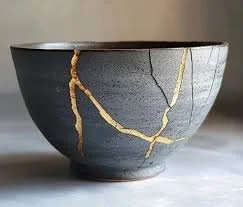
My housemate dropped a small soy sauce dish this morning—the modest ceramic kind you fill for dipping gyoza with the satisfyingly crispy bottoms. It shattered on the kitchen floor. Most of us would have swept up the pieces and ordered a replacement on Amazon. She didn’t. She announced she was going to repair it using kintsugi, the Japanese art of mending broken pottery with lacquer dusted in gold. The fractures would not be hidden. They would become the most striking part of the dish.
I’ve known about kintsugi for years, but something about that moment in our shared kitchen made the idea land with fresh force. Here we are, living in a culture engineered for disposability—new phones, new shows, new careers—yet this centuries-old practice insists on the opposite: that a break is not the end of value but the beginning of something deeper. What if the same logic applied to something larger than a sauce dish? What if it applied to a career?
Consider the world of UK non-scripted television—reality formats, documentaries, factual entertainment, the unscripted series that fill our screens. It is a freelance ecosystem of breathtaking fragility. Pitches are developed for months only to be rejected in a single email. Promising shows are axed mid-run or never make it past pilot. Commissioning windows slam shut, leaving producers, researchers, editors, and crews staring at months of silence. Budgets tighten, burnout spikes, and the competition in London is relentless. It is an industry that breaks people with impressive regularity.
And yet, like the shattered ceramic, these breaks contain hidden possibility.
Kintsugi does not merely repair; it revalues. The gold doesn’t disguise the damage—it celebrates it. The philosophy draws from wabi-sabi, the Japanese acceptance of imperfection and impermanence. A mended piece is not “as good as new.” It is better. More interesting. More valuable because of its history. The question is whether we can train ourselves to see career setbacks the same way.
Here are seven ways the logic of kintsugi can quietly transform how you move through the unpredictable terrain of non-scripted TV:
1. Acknowledge the Break The process begins with acceptance. You do not pretend the bowl is whole. In television we are taught to curate flawless showreels and LinkedIn profiles. But the industry is littered with invisible fractures: the six-month research project that died, the format sold abroad that never returned, the team disbanded when funding vanished. The first move is to stop hiding them. In the right room—industry drinks, a development meeting—tell the story plainly: “Our last series collapsed because access fell through, but here’s what it taught us about audience behaviour.” Vulnerability, oddly enough, becomes a form of strength in a business built on human stories.
2. Gather the Fragments Before any gold is applied, you must understand exactly how it broke. After a project collapses, resist the urge to blame “the industry” and move on. Sit with the pieces. Run the quiet post-mortem. What worked in the edit? Where did the pitch miss? What team dynamic should you avoid next time? The freelancers who treat every cancelled show as private market research come back noticeably sharper. They spot hybrid format opportunities others miss.
3. Repair with Intention Gold is not free. It is deliberate and costly. In the lengthening gaps between gigs, your choice of repair matters. Use the downtime to master short-form video for TikTok and YouTube, experiment with AI editing tools, or show up at the Edinburgh Television Festival even when motivation is low. Join the WhatsApp groups. Swap war stories. The skills and relationships you add in these periods are the gold that makes the next version of your career more resilient than the last.
4. Highlight the Cracks In kintsugi, the golden seams are not an embarrassment; they are the feature. Non-scripted television runs on authenticity. Commissioners and audiences are drawn to people who have lived the chaos. So weave your setbacks into the narrative. “After the rights disaster on our last documentary, I spent three months rebuilding access—and now I have three strong talent attachments.” Those cracks become proof of resilience, crisis management, and a feel for the messy reality behind the polished final cut. In an industry that exports formats around the world, lived experience is currency.
5. Embrace Wabi-Sabi Nothing lasts forever, and that is not a bug—it is the nature of things. Linear slots shrink. Algorithms shift. No show is safe. The wabi-sabi mindset frees you from waiting for perfect conditions. Use the uncertainty. Shoot a proof-of-concept on your phone. Spin a podcast off a stalled idea. Mentor the next wave of researchers. The most prized kintsugi pieces have been broken and repaired several times. The same can be true of a career that keeps evolving.
6. Mend with Patience and Community Kintsugi cannot be rushed. The lacquer needs time to cure. Freelance culture glorifies hustle, yet the mental health cost—widespread anxiety, depression, quiet exits from the industry—is undeniable. Give yourself permission to pause. Rest. Seek perspective, perhaps even a short detour outside television. And lean on others: former colleagues, production groups, mentors who have survived their own breaks. The strongest repairs are often collective. Your network becomes the shared supply of gold.
7. Emerge Stronger at the Seams Finally, understand the quiet paradox: the mended bowl is more valuable than the flawless original. Every survived setback layers you with rare qualities—calm under pressure, creative improvisation, the ability to find story in disorder. You become the producer, director, or editor who has been broken and repaired. That version walks into meetings with a different presence. Commissioners notice. In a relationship-driven business, your golden seams make you memorable.
The genius of kintsugi is that it never promises the bowl will never break again. It simply equips you to turn the next break into something luminous. So the next time a pitch lands in the bin, a series is cancelled without warning, or another quiet month stretches ahead, remember the sauce dish on the kitchen floor. Your career is not ruined. It is being remade—stronger, richer, and far more interesting than the unbroken version ever could have been.
The next big opportunity is not waiting for perfection. It is waiting for the version of you that already carries the gold.